
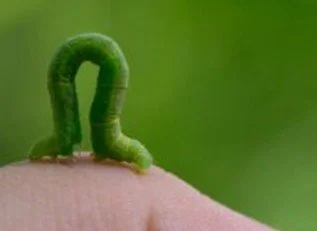
More Inchworm than Lightning
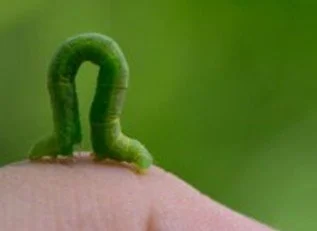
Excerpted from Savage River Journey: Lessons from the Forest (coming Fall 2026)
Gretchen Martens, Retreat House Covenant Partner
Wild Spirituality Co-Organizer and Wild Guide | Author, Teacher, and Soul Doula
Like lightning, or bullets that fragment on impact, abuse, pain, and neglect scatter invisible shards we often carry undiscerned our whole lives. These fragments embed themselves deep in our bodies and memory, influencing the stories we tell our Selves and others about who we are and we got here.
It can take years, or even a lifetime, to locate and gently remove this shrapnel. And just when you think you’re finally whole again, another splinter rises to the surface, asking to be healed. Paradoxically, the more you heal, the more aware you become of how fractured you once felt. You may look at yourself today, barely recognizing the woman you were—like a Picasso self-portrait, distorted yet telling painful, inconvenient truths.
The invitation is not to erase the fractures, rather, the challenge evokes the Japanese practice of kintsugi, the art of repairing shattered pottery with veins of gold—beautiful not despite the brokenness but because of it. We cannot control how life breaks us open, but we can choose how we reimagine the pieces—whether the fragments of what once was become evidence of destruction or the inspiration for renewal and what you will become.
My Savage River journey became an act of alchemy, gathering the shards of what was and repurposing them into who I was becoming. Metamorphosis turned woundings and scars into a rich and luminous solder, intensifying my sacred inner fire.
For more than two decades, solo personal retreats to places wild and remote offered me the opportunity to dive deep into wild learning. Wildness acted as both mirror and mentor. Wild learning has shaped my spiritual formation and healing journeys in ways I could not have imagined or predicted. The natural world has an uncanny ability to offer the precise wisdom required in any given season. Sometimes that wisdom comforts, sometimes it confronts. Always that wisdom invites me to walk the edge of becoming—to grow into my highest Self, inch by inch. For that, I am profoundly grateful.
One warm summer afternoon, sitting on the porch of my cabin and sketching while on retreat in the Savage River Forest, I was visited by two inchworms. One was bright green and nearly an inch long. The other was small, delicate, patterned with lichen-green diamonds and a dark underbelly. I watched as the smaller inchworm began crossing my drawing pad.
Ironically, inchworms are not worms at all but larvae of moths in the Geometridae family, with 35,000 species worldwide. Without legs in the middle of their bodies, they move by contracting and extending, anchoring and releasing. Their journey may not be dramatic, but it is precise.
Despite her size, perhaps a quarter of an inch long, and the vastness of her universe, this tiny creature never hesitated for more than a few seconds before choosing her next movement. Her progress almost microscopic, no more than a quarter of an inch at a time, each advance was entirely decisive. Not rushed. Not frantic. Simply the next right motion, delivered with determination. Becoming is often less lightning strike and more inchworm.
The journey of change can feel long and arduous, and the last thing you need is more contraction—to tote a gigantic backpack weighted with unexamined grief, resentment, anger, shame, or regret. Freedom requires tending the subterranean basement of the Soul—clearing, cleansing, grieving, forgiving, discerning—before the journey begins. It requires setting healthy boundaries. It requires Self-compassion for the parts of us that once believed survival depended on silence or performance. And like all deep work, the extensions unfold in stages, inch by inch.
Like the inchworm, you must liberate your Self from old anchors that no longer root you—to unstick your Self— before you can grow forward. Letting go is not abandonment; it is movement. Letting go creates the spaciousness to say yes to what is emerging, to lean into the release from your old Self. Sometimes this growth comes as lightning—sudden illumination that splits you wide open. Sometimes growth arrives incrementally, as imperceptible as the movement of an inchworm, as you practice the gentle art of becoming.
As I watched that inchworm negotiate my sketchpad, I recognized my own sacred journey. From a woman with almost no sense of Self I had grown into a woman who intimately knew and cherished her Sovereign Self. The subtle process was faithful to my fragile, undiscerned Self who yearned become. Quarter inch by quarter inch. Lightning strike by lightning strike.
Lightning struck and I realized I had a Self—not a role, not a mask, not a collection of expectations but a powerful Sovereign Self capable of choosing differently and realizing her full potential. Lightning struck and revealed two paradigms that clandestinely shaped my life—I’m never good enough and I don’t matter. But these were inherited scripts, not truth. The Good Girl released her grip, the Superwoman cape slipping from her shoulders. Lightning struck, and I saw how often I had organized my life around powerlessness—not because I was weak but because it was the story I had been taught. The I’m Fine mask disintegrated and the Victim was met with compassion rather than exile, for she too represented a learned way of being. Lightning struck, and The Responsible One was finally invited to rest.
I did not reinvent myself. I was not transformed. I simply removed the debris from my past. I reclaimed She who had always been there, patiently waiting—my precious Sovereign Self.
Reflection Questions
Stories and Illumination: What invisible shards from your past shape the stories you tell about yourself? What inherited script are you ready to question? I’m not enough. I don’t matter. I can’t ask for help. Has lightning ever struck in your life—a moment of sudden clarity that changed everything; what did it reveal?
Integration and Reclamation: What cracks in your life might actually be veins of gold? What part of you is asking not to be exiled but understood? What debris might you gently begin removing to uncover your Sovereign Self?
Inchworm Wisdom: Where in your life is progress happening a quarter inch at a time? What would it look like to trust incremental growth rather than waiting for dramatic transformation? What must you release in order to grow forward?
Becoming: Are you trying to reinvent yourself, or reclaim yourself? What would it mean to walk the edge of becoming with compassion rather than urgency? If you trusted that you already carry a Sovereign Self within you, what choices would you make today not someday?

El Camino del Amor: Embracing My Spiritual Calling

Jesus said, “Come, follow me, and I will make you fishers of people. And a quote from Ralph Waldo that says, “The creation of a thousand forests is in one acorn.” ( verse comes from meditation 🧘🏽♀️on Hallow app and Ralph Waldo Emerson quote from a tag on my teabag)
As I embark on my spiritual leadership and learner internship, I find myself grappling with a whirlwind of emotions—excitement, nervousness, and uncertainty. This new chapter feels both daunting and exhilarating. Yet, in the midst of these feelings, I hold onto the profound words of Jesus: “Come, follow me, and I will make you fishers of people.” This invitation reassures me that I am stepping into a purpose that is greater than myself.
I reflect on what it means to be a “fisher of people.” It’s not just about guiding others; it’s about creating connections and nurturing relationships grounded in love and understanding. I trust that I have been equipped with the essential tools for this journey: gentleness, kindness, and compassion. These qualities are not just attributes; they are gifts that I can share, infused with the power of the Holy Spirit.
I realize that with each interaction, I have the opportunity to bring comfort and hope to those I encounter.
In this moment of vulnerability, I acknowledge that it’s natural to feel anxious. It reflects my commitment and desire to make a positive impact. I remind myself that it is through this uncertainty that growth occurs. I don’t need to have all the answers or be perfect; I simply need to be open and willing to learn. Each challenge is a chance to deepen my understanding and strengthen my spirit.
Just as Ralph Waldo Emerson wisely said, “The creation of 1000 forests is in one acorn.” This quote resonates deeply, reminding me that even the smallest efforts can lead to profound transformations. I may feel like a single acorn now; however, within me lies the potential to grow into something extraordinary, capable of nurturing a forest of love, hope, and change.
As I step into this role, I embrace the idea that I am both a teacher and a student. I am here to share my heart and my insights, but I am also here to listen and learn from others. Every person I meet has a unique story, and I am eager to hear those stories and offer support. I trust that I will find guidance along the way as I lean into my purpose.
I take a moment to breathe deeply and center myself in this truth: love is the greatest force I can offer. Whether through a kind word, a listening ear, or a gentle gesture, I can spread compassion in ways that resonate deeply with others. I am committed to being a vessel for this love, allowing it to flow through me as I navigate this journey.
With each day of this internship, I strive to embody the spirit of love and grace that Jesus exemplified. I am ready to embrace this opportunity, knowing that I am supported by a higher purpose and the incredible potential that lies within me. As I move forward, I carry the message of love into the world, trusting that I am fulfilling my calling to make a difference, and to be a light in the lives of those I encounter.
I will seek to cultivate relationships built on understanding and compassion, recognizing that each person I meet has their own struggles and stories. With every interaction, I aim to reflect the fruits of the Spirit—showing love, extending kindness, and offering patience—so that others may feel the warmth of God's presence through me. I trust that by living out these values, I can inspire hope and bring comfort to those in need. As I embark on this journey, I am excited to learn, grow, and step into the role that has been laid before me, knowing that I am not alone but surrounded by a community of faith and the guiding hand of the Holy Spirit. Together, we can create a ripple effect of love and transformation in the world!
"But the fruit of the Spirit is love, joy, peace, forbearance, kindness, goodness, faithfulness, gentleness, and self-control. Against such things there is no law." (Galatians 5:22-23, NIV)
Sandy Centeno is Retreat House Spirituality Center’s pastoral intern for the 2024-25 year.

The wisdom of the fire pit

By Kathy Oehler
I am a place of gathering. I was birthed from a weeks’ long vision centered on a large empty space in the far corner of a yard that welcomed and encouraged life. For years, the holder of the vision knew something special was meant to be in that space, and so she waited. And so it came to pass that while humanity was separated from one another in the spring of 2020, I began to beckon, extending an invitation to “come outside and play.” In late summer I was created with smooth pea gravel from the river bottoms and bricks to contain the wood fires that were to come. An oak tree and wildflowers became my close companions.
The one who received the vision recognized me as a sacred space whether the fires were lit or not. Barefoot in the pea gravel, she was connected to me for the first time in many years. She experienced my presence, and encouraged others to do the same. I rejoiced to receive their touch and I blessed them with the energy that came from within me.
Those that came were so happy to be in one another’s presence again. I have held the space for the joy and celebration of reconnecting with smiles, whiskey and wine flowing, impromptu state fairs, deep soul sharings over life changing books, rising fireflies at dusk, the awe of clear, starry nights, and music and dancing.
Through the summer and fall of 2020, I witnessed disconnection as well as I held the space for conversation. Those gathering around discussed the state of our world and all of the politics within. I heard tales of conspiracy, racism, fear, prejudice, judgement and ideas on how to regain or maintain power. The one who received the vision for my creation became aware for the first time that the feminine was rarely invited to partake in these discussions. She saw that the feminine place was one of listening at the feet of the masculine. This revelation changed her forever and empowered her to be determined to become part of the conversation.
Even one who comes to me and sits alone is not lonely. I and my companions welcome the solitary one who needs a separation from the chaos around them, who needs to breathe, and receive healing in the quiet. They reconnect with me in the simplicity of smooth gravel under the soles, leaves rustling in the breeze, brilliant colors in the garden, migrations of butterflies, and the deep spirituality of silently tending a fire.
Eventually, the one who received the vision learned that the space of gathering is not only a space in her yard. She recognized that a welcoming space resides within her as well. She came to see that we share the same longings: A desire to extend the invitation to others to “go outside and play”, a desire to be a place of deep listening where all of creation has its say, a desire to be a peaceful place of gathering and belonging, a desire to be a safe, sacred, healing space for all who come. It was a revelation to her to find that she carries the place of gathering within her wherever she goes, and she ponders the truth that this same longing exists in all of humanity whether it is aware of it or not.
My invitation to you is to allow your life to grow so that you may reflect my longings:
To be open and welcoming
To be warm hearted
To gather around yourself those who seek warmth, belonging and acceptance
To listen deeply
To be a peaceful place of familiarity, healing and rest
And to always remember to feed, tend and guard your fire so it never goes out completely
Kathy Oehler’s ministry is to facilitate spiritual and emotional healing through listening, loving presence, prayer and writing in the form of letters from God and poetry. Her journey embraces the mystical path and the cultivation of joy as a spiritual practice. Her hobbies include gardening, hiking, motorcycling, reading and learning a second language. She is currently enrolled in Seminary of the Wild, a program focusing on creation spirituality. She is drawn to finding Christ in nature and looks forward to exploring this space and learning more about God, herself and the world around her.
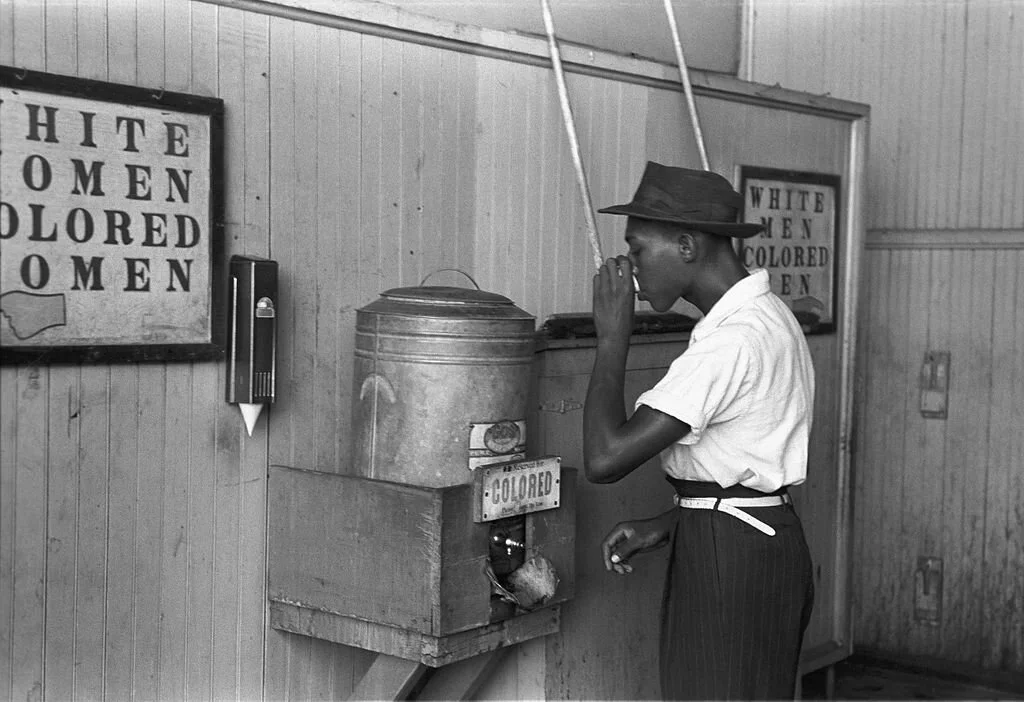
Back to the Body: A Conversation on Race with Rev. Dr. Clay Brantley
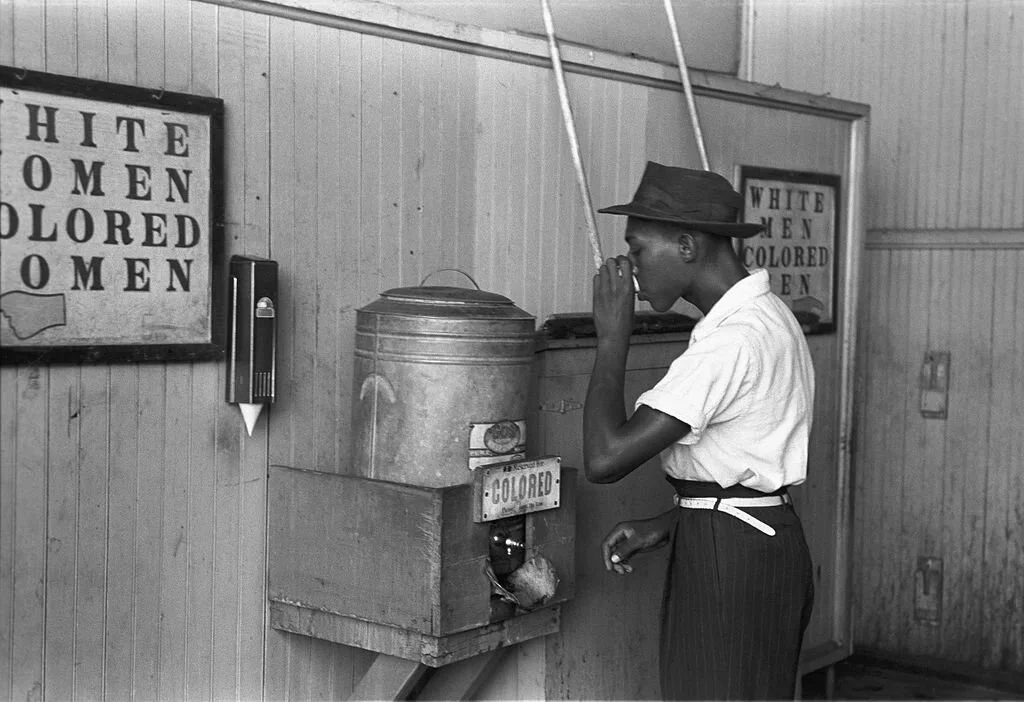
It was an honor to visit with my friend Rev. Dr. Clay Brantley recently to better understand his interest and energy around racial reconciliation in his life as well as his commitment to bringing awareness of racial wounds in our country as well as those we hold within ourselves. Clay and I have spent much time on ZOOM together this past year. He is kind, soft-spoken and thoughtful. I knew Clay was dedicated to this specific work, but I didn’t know why. We recently connected to explore his sacred story. My hope is you’ll learn more about Clay, be inspired by his brave vulnerability and perhaps consider cultivating new practices that might create a more, whole and full you in God.
Retreat House Spirituality Center: You've been spending time in the racial reconciliation space for about four years now. Through our conversations, I've learned that this work is very much an ongoing learning process and not so much a destination. I'm curious to understand more about your initial call to bring healing and understanding to race relations in our country. I know that you participated in a Civil Rights Pilgrimage in 2018. Was this the beginning of your call to learn more about race in America? What awakened you to this work?
Rev. Dr. Clay Brantley: Early in my ministry, I audited a class at Grayson County College on African American history. I was shocked at all I did not know, had not heard of, such as Emmett Till. I realized early on there was much I was not seeing on the issue of racism. I started slowly learning back then. Yet, as a preacher, I was very quiet on racism. It was not a topic I discussed much. I knew it was an issue in our society. I knew my Presbyterian church had issued statements on racism. Yet the topic was too hot for me. I didn’t want to stir up controversy or conflict.
Retreat House: It sounds like there has been a call within a call for you. I'm privy to your story of conviction and confession on the greyhound bus during the pilgrimage, and I believe it would encourage those reading this article. Will you describe the moment on the bus that moved you even further into your call?
Brantley: It was on the Civil Rights pilgrimage, after seeing so much history and realizing that we have so far to go for racial justice, that I knew I could not keep quiet any longer. I remember standing on the bus one day and confessing that as a white male preacher, I had been silent and that I was going to begin to speak and seek racial justice. Once I said yes, those opportunities began to come, in surprising ways. Yet, I still get very nervous when I talk about racial inequality.
Retreat House: We are both participating in My Grandmother's Hands, a 24-week somatic discussion and practice led by both you and Rev. Deanna Hollas through Retreat House. We explore questions like: "Imagine the following scenario. At each moment, observe your body closely. What does it experience? Where does it constrict? Where does it relax? What does it want to do? What emotions, thoughts, images or words bubble up?
You're walking in a busy shopping mall. Outside a jewelry store, two white cops - a man and a woman - stand side by side. Both catch your eye, lock gazes with you, and stare grimly at you as you walk closer. As you near the store, the male cop moves his hand and lets his palm rest lightly on the butt of his gun."
While I've noticed some body sensations in working through this book, I still have questions like is this really working? I’m a contributing to making the whole better?
Brantley: I am interested in this work with My Grandmother’s Hands: Racialized Trauma and the Pathway to Mending Our Hearts and Bodies by Healer and Trauma Specialist Resmaa Menakem because I feel a deep need to connect with my body. I maybe like you, notice some sensations. I wonder what they are and what to do with them. I wonder what difference it makes. At this point, my suggestion is to simply keep noticing. Connect with those sensations. Don’t jump ahead to judgment about will this work? Trust Resmaa. Lean into what they say and how your body feels. Be present. Give yourself space to breath and notice. The exercise you listed above is a good example. What do you feel? What do you notice in your body? Pay attention.
Retreat House: Do you believe doing this work contributes to healing the greater whole and racism in our country?
Brantley: I think this work is about healing and wholeness of our own lives. Racism infects the souls and bodies of whites, as it does of Blacks, though in different ways. To do the work of healing and wholeness in our society, we need to come to this work having done our own work. Resmaa has said numerous times that white people need to go off and do their work before they come to the table to discuss a way forward with Black people. I think this is true. I need to develop the capacity to be present, to not get defensive, to listen, and to know what is going on in me. I get strength when I develop an awareness and an ability to respond that comes out of love and not out of conditioned response.
Retreat House: I've heard you say that white people are plagued with perfectionism, and I would say I fall into this category. What encouragement or sentiments might you share around this notion?
Brantley: I have noticed the perfectionism tendency in me for years. I never associated that with being white until just a few weeks ago when I saw it in a list of what it is to be white. That puzzled me. How is perfectionism unique to whites. Then I sat with it. Watch how that landed in my body.
“With regards to racism, how much has perfectionism kept me from engaging and acting, because I didn’t want to do it wrong?”
— Rev. Dr. Clay Brantely
How has perfectionism kept me from speaking because I didn’t want to say the wrong thing? How has perfectionism locked in my own guilt or shame and kept me from moving into healing? When I sat and listened to my body, I knew my perfectionism was keeping me from taking the risk I need to take in order to engage racism.
Retreat House: How did you eventually move from thinking about the work of racial reconciliation and being "blocked by and in your head" to living and being more in your body? And, why do you feel this is significant to this process?
Brantley: I have being trying to understand racism and its impacts on Blacks for a long time. I’ve read books, attend book discussion groups, watch films and discussed the films. All this is good. I learned a lot and gain much insight. I recently read a book, The Body Keeps Score by Bessel Van Der Kolk that helped me to see the trauma I carry in my body. As I listened to my body, I could feel those blocked and locked places, places that refuse to engage with what is before me. I knew I had some deep work to do in trying to connect to my body. Then I read My Grandmother’s Hands which made the connection between that trauma I knew was in my body and racism. As long as I kept up in my head, in my thoughts about racism, I was safe and not engaged. When I began to engage what was going on in my body, I started to move and see and feel in new ways.
Retreat House: Somatics is a new word to many people. Noticing that it is starting to make its way into healing circles, I wondered what your understanding of somatics, and why do you believe that somatics is part of healing racial wounds in America?
Brantley: We have conditioned responses to various situations, responses that happen without much thought, that flow from our bodies and reptilian brain. Our fight, flight, freeze response. If we are not aware of these conditioned responses, we treat them as normal. If we are aware, we can begin to make new choices. If we do not do our somatic work of noticing what is happening in our bodies and in our conditioned response, we will not be able to move down the path to healing. So many of us deny the depth of racism in our society and in our bodies. This denial is keeping us locked and blocked from healing. Confession is good for the soul.
Retreat House: One of the aspects to perfectionism that plagues the white community is the desire to fix. I see it in myself and constantly remind myself to be okay with the mystery, with the process, with the noticing. Will you share some your perspective on the importance of simply developing our capacity to be present?
Brantley: The desire to fix is a desire to remove that which is bothering us. If a loved one is struggling, we want to fix their problems because their problems are causing us pain. Yet, that does not address the problem or the possibility of growth that struggling with that problem can bring.
“ The capacity to be present is the capacity to simply hold space for what is happening.”
— Brantley
To listen. To see. To feel. To notice. It is very hard to do because we are problem solvers who want to get to a solution. Yet the solution we come up with to calm our anxiety over the problem will not be the best way forward. The best way forward can only arise out of presence, out of seeing and listening. This is an invitation into the struggle. This is deep soul work for me. To be willing to show up as best I can, heart, mind, body and soul, and allow the struggle to increase my capacity to love and be present.
Retreat House: Some of the language associated with this work is very off putting to some. It took quite a bit of time for me to even understand that I was indeed racist. Not overtly but more subconsciously as I was contributing and benefitting from the systems that continue to oppress Black people. Some describe this as white supremacy. This word makes me cringe, with all of its harsh images and implications yet I believe getting comfortable with the reality of this language is integral to our healing. What does white supremacy mean to you?
Brantley: I don’t like the word white supremacy. That doesn’t mean it isn’t accurate. I just don’t like the way it makes me feel. Surely I don’t see my white self as supreme to others. Surely that is not the way this society I live in, the country I love, the church I have spent so much time in is. And yet, as I began to develop the capacity to see, I began to see how I thought whites are smarter than Blacks, whites work harder than Blacks, whites are more successful than Blacks. I saw how that just seemed to make sense to me. I know intellectually that this is not true, whites are not smarter than Blacks, or work hard. So I wonder where these ideas came from. I don’t remember my parents tell me these lies. I learned it from the society I grew up in. I incorporated this into my conditioned responses, so I didn’t have to think about whites and Blacks. I already knew. When I had this insight, I knew that I was racist and the society and even church I love and serve is racist. I still don’t like the term white supremacy but isn’t that what this is – thinking that whites are supreme to others in thinking, in hard work, in success.
Retreat House: As a white man living in America, your voice is under attack. You have said that this is one of the greatest tragedies happening right now. Will you shed more light on this noticing?
Brantley: The white man’s voice is being challenged more than ever. I am sure for many of us white men it does feel like we are under attack. Our ideas, our status, our position in society is being challenged in ways it never has before. I do not think this is a tragedy. I think this is a good and necessary thing. I believe white men, even more than white women, have been blinded by power and position that has been ours for over 400 years.
What has been normal for so long is not being questioned. That does feel like an attack. For so long, we white men were the ones who dictated how things were to be. We still do to a large extent.
“I am not sure many white men have developed the capacity to be challenged and questioned.”
— Brantley
We don’t know what to do when our motives as being examined. How to respond. This goes back to developing the capacity first to listen and then respond. White men are so use to being in charge, so use to problem solving, so use to having things go our way, that when they don’t, we feel attacked.
Somatics can help with this. When we feel attacked, we can notice what is happening in our bodies. We can get a perspective of what is happening in us. We can see our conditioned responses. We can show up in a new way. This is hard. Our first response is to be defensive, guarded. To see that defensiveness in us, to name it is a huge step forward that allows us to be present with one another in new ways.
I will say that white men are entering a time of great uncertainty, even great fear. Our place in the conversation is being questioned and challenged. In a few years, white will not be the majority in this country. White men are used to being in control. In many places, you see whites trying to determine the conversation, what can be discussed, what is allowed. I see this as a last ditch effort that ultimately will not work. Freedom will win, not control and censorship. The truth will be spoken, even if we don’t want to hear it. White men need to develop the capacity to hear, to see, to be present, to notice what is happening in our bodies, just like everyone else.
Back to the Body: A Conversation on Race with Rev. Dr. Clay Brantley was reported on by Emily Turner as part of a series being produced by Retreat House Spirituality Center’s series Invitation to Heal: Racism in America. To learn more about our Conversations on Racism discussions hosted by Retreat House, send Clay a note.
Five years ago, Brantley left the local church he was serving to follow a mystical path, a call into a deeper following of Christ. This journey has led him into deep soul work. He is a covenant partner and director of Retreat House. Clay is married to Crysta. They have two children, two dogs and a turtle. Learn more about Clay here.
Emily Turner is a writer and trained spiritual director. You can learn more about her here.