
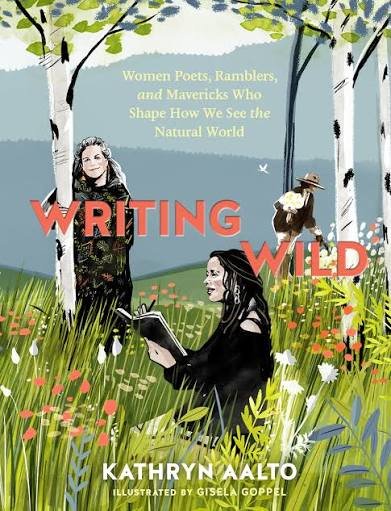
On November 16, the Retreat House book circle explored Writing Wild by Kathryn Aalto.
Aalto profiles 25 women whose writing has shaped how we see and relate to the natural world. Aalto explores the places that shaped these writers and the different ways they paid attention to the natural world. The book broadens our sense of what the living earth can hold and how writing about a place can also be a way of asking what it means to belong. The book offers powerful invitations to step outside, look closely at the places we know, and write about what we discover.
Below are an expanded set of questions to explore as a companion to the book or as individual writing prompts.
When have you experienced the natural world not as scenery, but as presence? What made the experience different?
What does it mean to belong to the Earth rather than simply live on it?
Many of these writers practice extraordinarily close attention. When does attention become a spiritual practice?
Have you ever felt addressed by the natural world—as though a place, animal, tree, weather event, or landscape were communicating something to you? What did you make of that experience?
What place feels sacred to you? Did you decide it was sacred, or did you discover that it was?
What is the difference between appreciating nature and being in relationship with it?
Robin Wall Kimmerer writes about reciprocity. If the Earth gives to us, what does a reciprocal relationship ask us to give back?
Can grief for the natural world be a form of love? What happens when we allow ourselves to feel that grief rather than turn away from it?
Where do wonder and grief meet? Can we remain open to beauty while knowing how much is being lost?
What does the wild teach us about impermanence? About death, decay, regeneration, and becoming?
What might the natural world teach us about surrender—about allowing rather than controlling?
Is there something about yourself that becomes more available when you are outdoors? Who are you there that you aren't elsewhere?
Where have you experienced nature as teacher? What did you learn that you might not have learned from another person?
What changes if we stop thinking of ourselves as observers of nature and understand ourselves as participants in a living community?
What does "wild" mean spiritually? Is there something wild within us as well as around us?
What part of ourselves might we have domesticated that the wild invites us to reclaim?
Does belonging require anything of us? If we understand ourselves as belonging to the living Earth, does that create responsibility?
What would it mean to regard a place as kin rather than property?
Where do you experience the Sacred most readily—in beauty, silence, danger, vastness, intimacy, cycles, creatures, something else?
What does the Earth seem to be asking of you at this point in your life?
